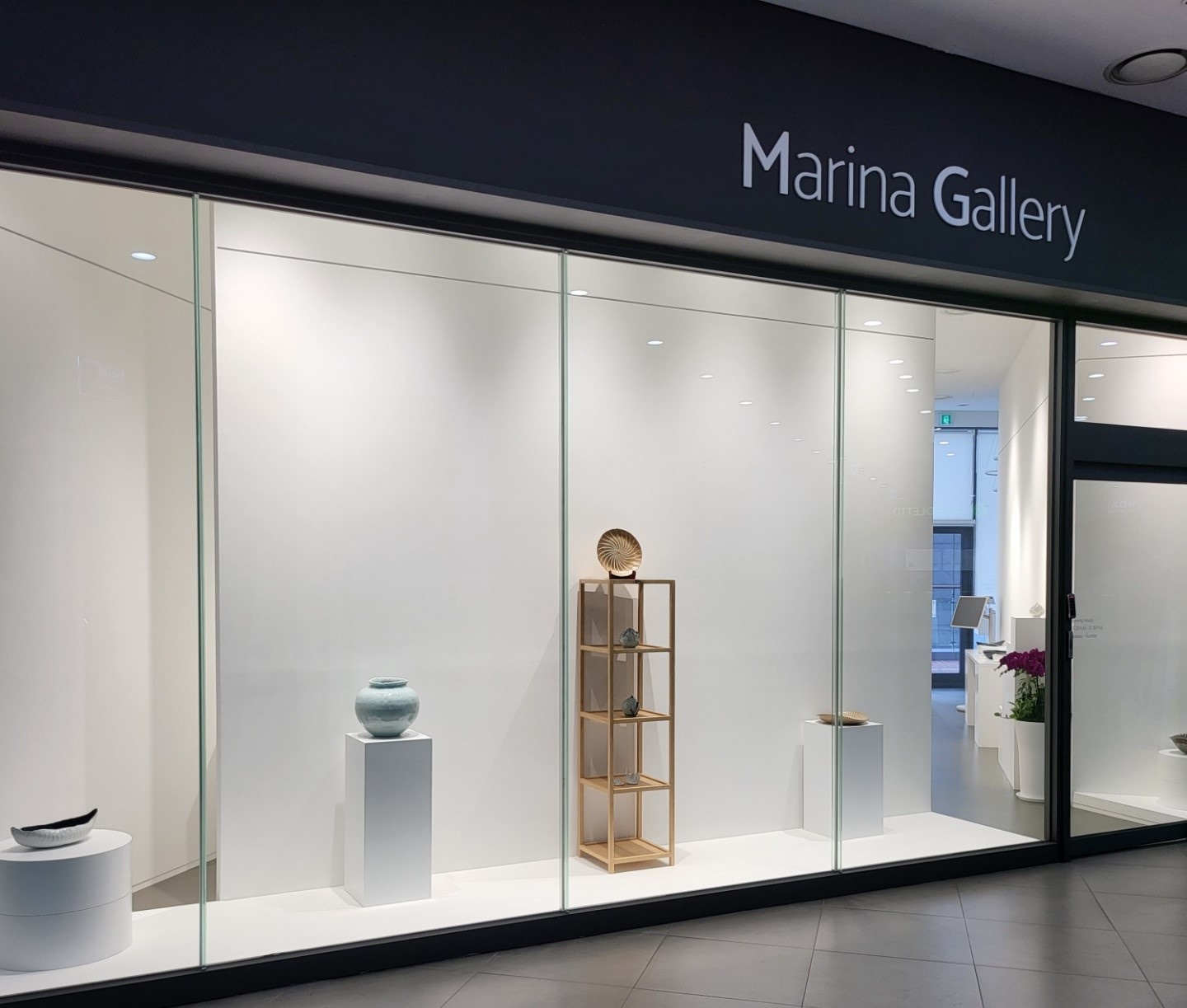
The opening of Marina Gallery_Yunhee Marina Ham
작성자 관리자
날짜 2024-07-07 22:08:02
ONE OF NATURE_너와 나를 잇는 시간
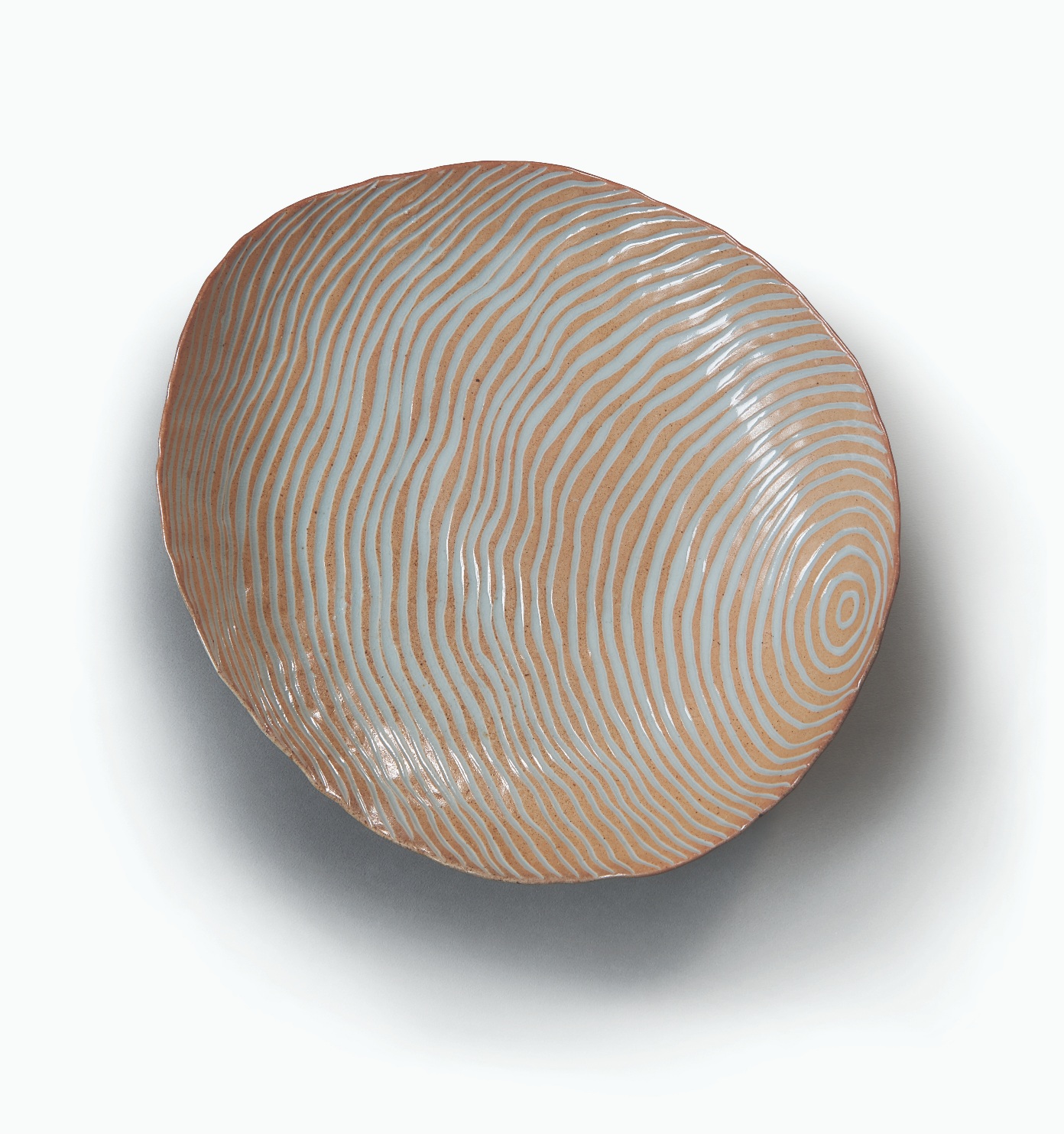
바람의 잔물결(The ripple with the wind)_백자토,Partially glazed inside_8.5x34x31cm
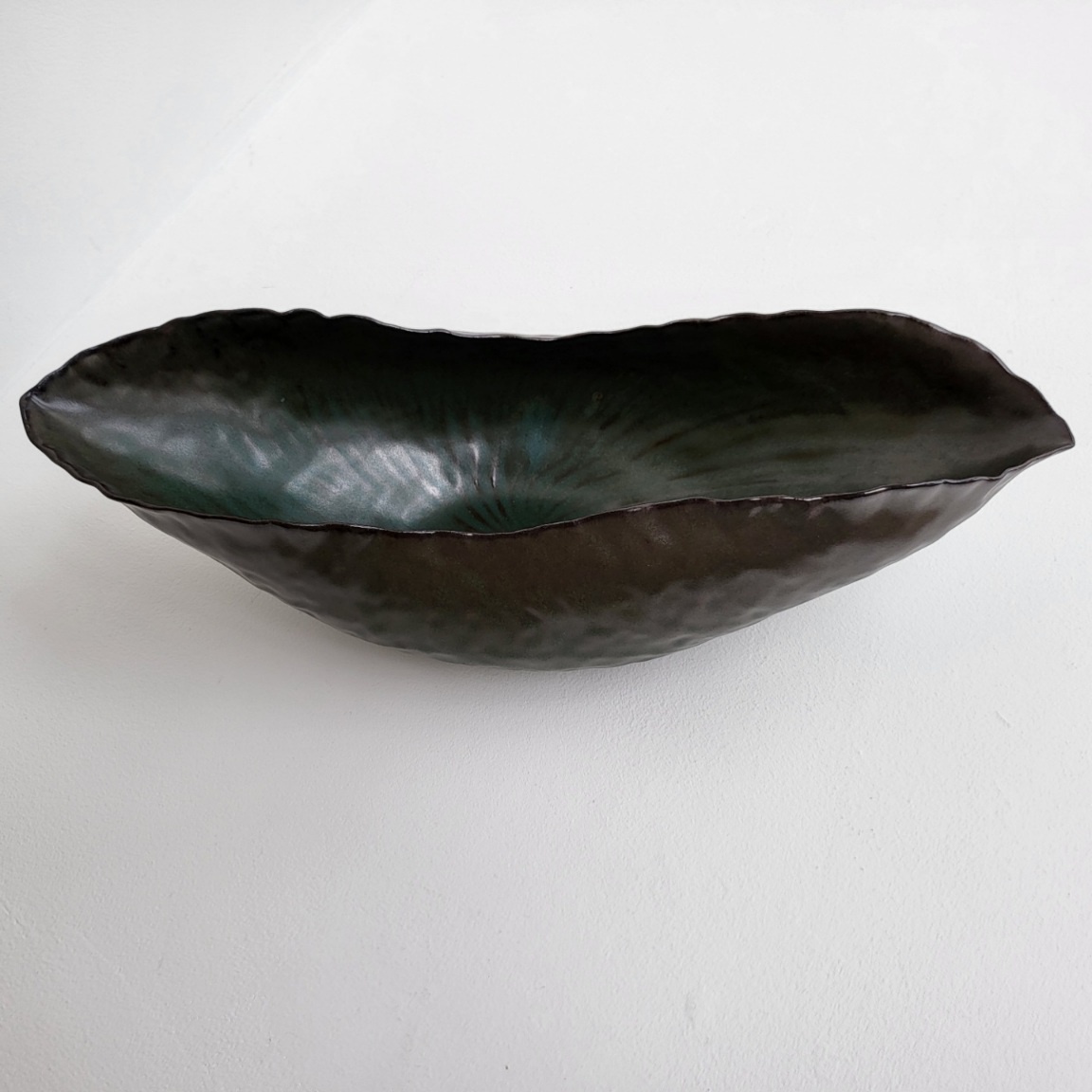
침묵의 숲(Silent Forest)_백자토, Glazed with deep green_11.5x39.3x15cm
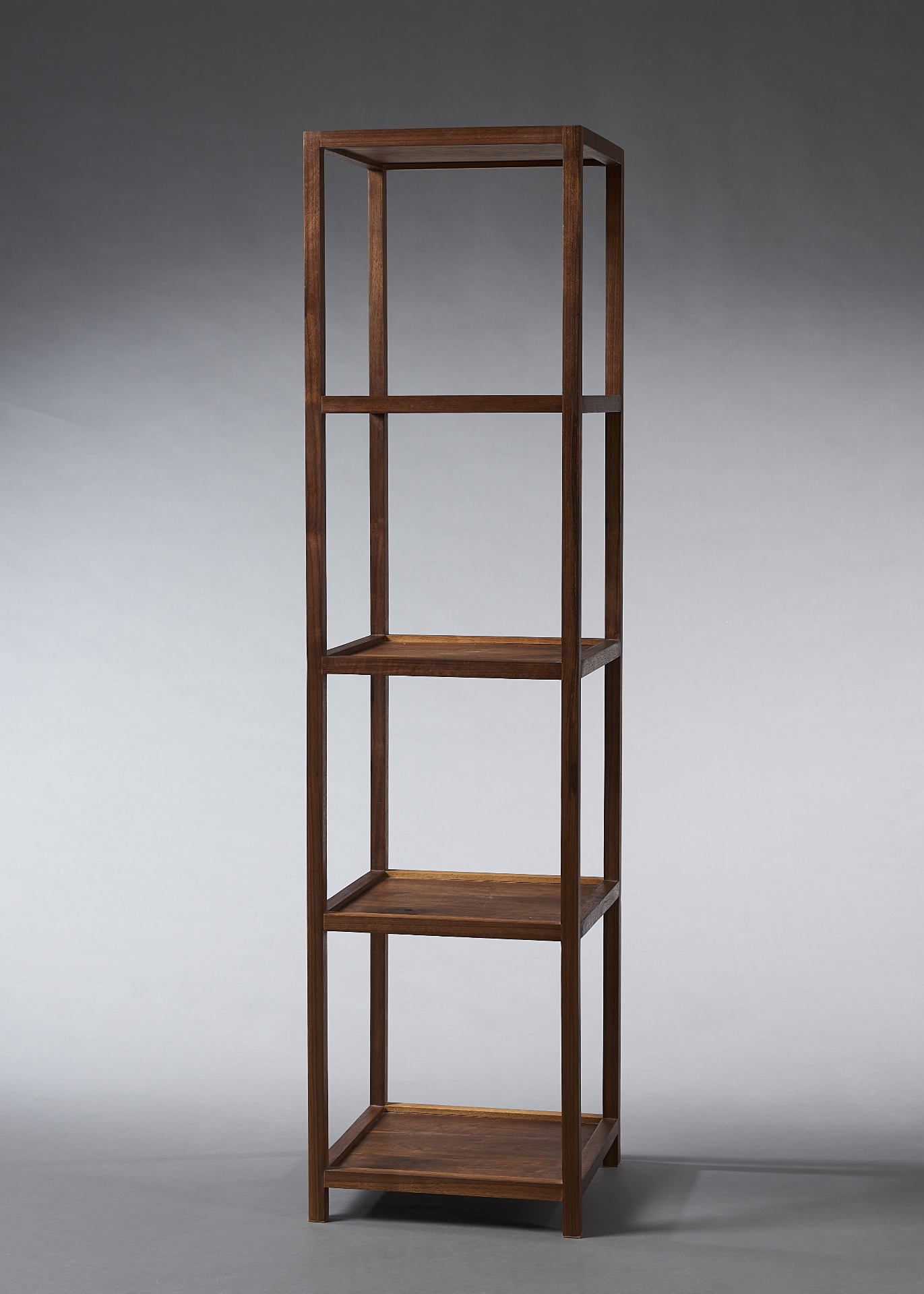
사방탁자(Walnut sabang table,opened four directions)_호두나무_1390x35x35cm
ONE OF NATURE: 너와 나를 잇는 시간
접었다 폈다 반복되는 일상 속에서 무언가 손에 잡았다고 생각했지만, 정작 남은 것은 없음을 깨달은 순간이 있었다. 그저 부서지지 않기 위해, 멈춰 서서 스스로를 내려놓거나 비워내야 했던 그 시간들. 그때 나에게 찾아온 쉼표는 '여행'이었다.
중국 작가 잔홍즈의 말처럼 '독서는 앉아서 하는 여행이고, 여행은 서서 하는 독서'라 했던가. 여행길에 챙겨간 도자기 역사서를 읽으며 생각했다. 어느 나라든 역사의 시작에 인간의 가장 소중한 생존 도구인 토기(土器)가 있고, 그 속에는 나라별 고유한 문화적 배경이 담겨 있다는 사실을. 박물관마다 진열된 도자기들을 보며, 내가 살고 있는 이 시대의 순간을 흙으로 표현하고 싶다는 강한 호기심이 일었다. 그렇게 시작된 도예는 지금의 나를 있게 했다.
오랜 기간 암실에서 현상과 인화를 거치며 빛과 어둠의 밀도를 다루었고, 판화를 배우며 다져온 감각은 도자기의 음각 기법으로 이어졌다. 도예를 시작하며 수없이 부서지고 갈라지는 흙을 앞에 두고 배운 것은 인내였다. 내 의지대로 되지 않는 재료 앞에서 기다리는 법을, 그리고 실패를 흙 속에 다시 묻고 처음부터 손을 얹는 법을 익혔다. 시간이 흘러 나무의 향과 결에 반해 시작한 목공예는 원하는 형상이 될 때까지 기다리고 수정할 수 있다는 점, 그리고 내 손길에 즉각적으로 반응하며 형태를 드러내는 기쁨을 알려주었다.
흙과 나무, 이 두 재료를 다루는 과정에서 나는 자연스럽게 연결된 '선(善)한 자연의 손길'을 목격한다. 흙과 물이 만나 물성이 변하고, 나무와 바람이 만나 불을 피우고, 그 불이 다시 흙과 만나 작품이 탄생한다. 어느 것 하나 혼자 이루어지는 것이 없다. 서로 기대고 스미며 변화하는 이 과정은, 우리네 삶의 모습과 무척 닮았다.
내 작업은 유년 시절 기억 속 풍경들에서 시작된다. 숲속의 마른 낙엽, 물수제비를 던질 때 일렁이는 잔물결, 해변 모래사장에 남겨진 신비로운 잔상과 바람의 촉감 같은 것들이다. 이러한 기억은 흙으로 빚어낸 꽃잎과 나뭇잎, 빗살 문양을 닮은 그릇, 자연의 모티브를 간직한 연적이나 촛대로 재현된다. 물레 대신 느리지만 손으로 직접 흙을 쌓아 올리는 코일링(coiling) 방식을 택하는 이유도 여기에 있다. 일정하지 않은 손맛은 유약을 발랐을 때 다채로운 그라데이션으로 나타나고, 손끝에서 부서질 듯 얇게 표현된 기물들은 정형화되지 않은 자유로움을 머금는다.
물질(Matter)은 어머니를 뜻하는 라틴어 'mater'에서 유래했다. 물, 바람, 태양, 흙과 나무 같은 물질이 우리 삶을 지탱하는 근원임은 말 속에 이미 새겨진 진실일 것이다. 그러나 우리는 너무 쉽게 취하고, 쓰고, 버리는 시대를 살고 있다. 작가로서 나의 소임은 자연의 순리를 거스르지 않고, 내 품에 들어온 것들을 소중히 여기며 진실된 예술적 표현에 도달하는 일이다.
나는 작품을 통해 이야기하고 싶다. 너와 나, 우리 모두 결국 자연의 일부라는 것을.
어차피 우리는 자연(自然)에서 다시 만난다.
글. 함윤희(작가, 마리나갤러리 대표).
ONE OF NATURE: Time That Connects You and Me
There was a moment I realized that what I thought I had grasped in the repetitive folding and unfolding of daily life had never truly been in my hands. To keep from breaking, I had to stop — to let go, to empty myself. The pause that found me then was travel.
As the Chinese writer Zhan Hongzhi once said, "Reading is travel done sitting down, and travel is reading done standing up." Carrying a history of ceramics on that journey, I came to see that in every civilization, the story begins with earthenware — the most essential tool of human survival — each piece bearing the distinct cultural imprint of its time and place. Standing before ceramics displayed in museums across the world, I felt a strong desire to express my own era, this very moment I inhabit, through clay. That longing became the beginning of my practice in ceramics, and it has brought me to where I am today.
For many years I worked in the darkroom - developing and printing, learning to hold the density of light and shadow in my hands. The sensibility I built through studying printmaking carried naturally into the intaglio techniques of ceramics. When I first began working with clay, I learned patience before anything else. Faced with a material that cracked and crumbled against my will, I learned to wait, to bury failure back into the earth, and to place my hands at the beginning once more. Later, drawn to the grain and scent of wood, I turned to woodworking — a practice that taught me the joy of a material that responds directly to the touch, revealing its form as I work.
In handling both clay and wood, I witness what I can only call the benevolent hand of nature — a goodness woven into the very way things meet and change. Water meets earth and transforms it. Wind meets wood and kindles fire. Fire meets clay and a work is born. Nothing comes into being alone. Everything leans into something else, seeps into it, changes through it. This process resembles, more than anything, the shape of a human life.
My work begins in the landscapes of childhood memory — dry leaves on a forest floor, the ripples that spread when a stone skips across water, the mysterious traces left in beach sand, the feel of wind on skin. These memories return as petals and leaves shaped in clay, bowls etched with comb-like patterns, water droppers and candleholders that carry the motifs of the natural world. This is why I choose coiling over the wheel — slowly building forms by hand, layer by layer.The irregularity of the hand shows itself in the gradations of glaze, and the vessels, shaped to feel almost fragile at their edges, hold within them an unscripted freedom.
The word matter comes from the Latin mater, meaning mother. That water, wind, sun, soil, and wood are the very ground of our lives may already be written into the language we speak. And yet we live in an age that takes too easily, uses too freely, and discards without thought. As an artist, I believe my responsibility is to resist that current — to cherish what comes into my care, and through that care, to reach toward something true.
I want my work to say this: you, and I, and all of us — we are part of nature.
In the end, we meet again in nature.
Writer: Yun-Hee Marina, Ham(Artist, Marina Gallery Representative)
